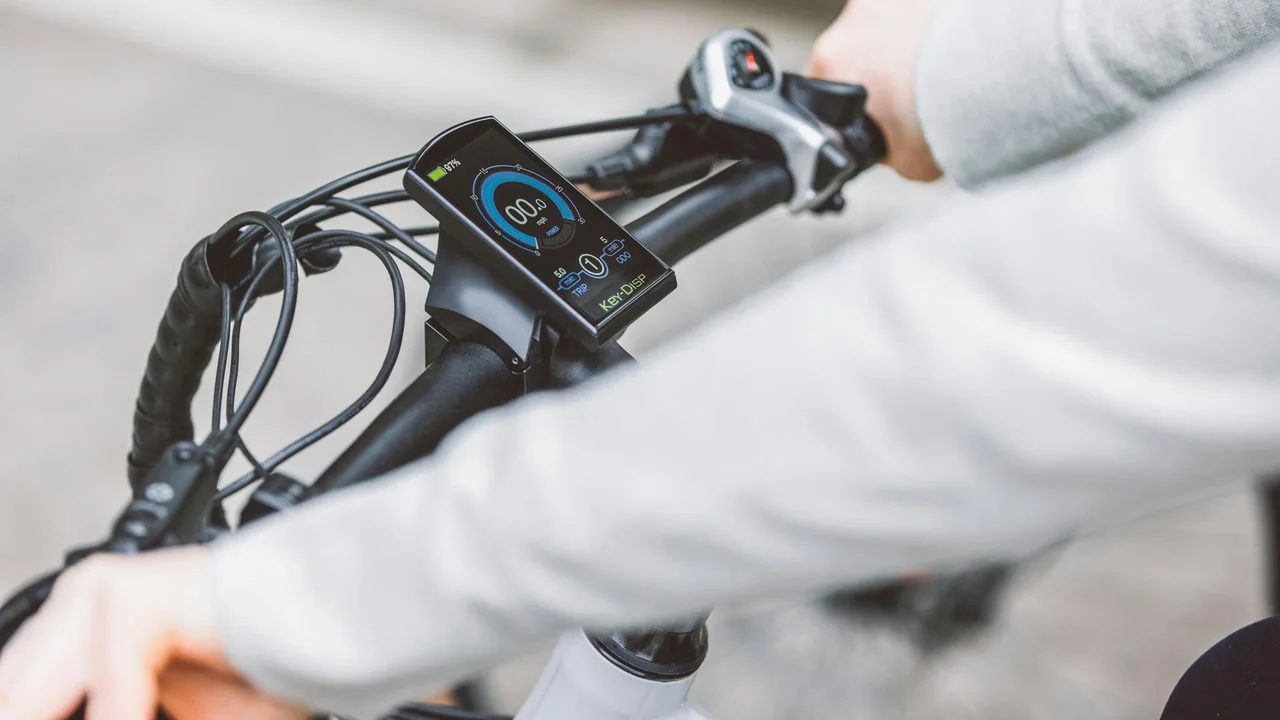
Day 3: The controller — what assist levels actually do
The assist level on your eBike isn't a speed dial — it's a wattage budget. Learn how the controller translates sensor input and your mode selection into precise motor power, why Turbo drains your battery 4–5× faster than Eco, and what the Cannondale Mavaro Neo 2's live watt display reveals about every pedal stroke.

You've learned what the motor does (Day 1) and how the sensor tells it when to kick in (Day 2). Today we open the third box: the controller. It's the component that sits between the sensor and the motor and decides exactly how much power to deliver. Understanding it will explain one of the most common beginner mistakes: running out of battery far earlier than expected.
What the controller actually does
The controller is a small circuit board — usually tucked inside the frame or mounted near the motor — that receives two inputs and combines them into a single output:
- Input 1: a signal from the pedal-assist sensor (cadence pulses or torque measurements, as you learned yesterday)
- Input 2: the assist level you've selected on the handlebar display (typically labeled Eco / Tour / Sport / Turbo, or 1–5)
From those two inputs it calculates a wattage output and sends that exact amount of power to the motor. Think of it like a thermostat: the sensor says "the rider is pedaling," the assist level says "keep the temperature at 3," and the controller delivers the current needed to hit that target — no more, no less.
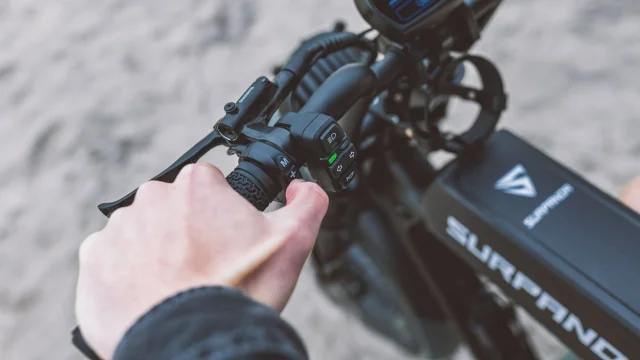
Why the assist level is really a wattage budget
This is the part most beginners miss. The assist level doesn't set your speed; it sets how much electrical power the motor is allowed to use per pedaling stroke.
A typical Bosch-powered eBike allocates roughly this wattage across its modes:
| Assist level | Motor power (approx.) | Best used for |
|---|---|---|
| Eco | ~25–30 W | Flat roads, long-range commutes |
| Tour | ~50–75 W | Mixed terrain, everyday riding |
| Sport | ~100–200 W | Hilly routes, carrying cargo |
| Turbo | ~250–300 W | Steep climbs, headwinds |
Every watt comes from the battery. Turbo mode on a 400 Wh battery drains that reserve roughly 4–5× faster than Eco mode does. The controller is enforcing that budget with every pedal stroke.
One real example: the Cannondale Mavaro Neo 2
The Cannondale Mavaro Neo 2 is a practical city eBike built around a Bosch Active Line Plus motor and a 400 Wh integrated battery. Its Kiox 300 handlebar display shows four assist modes — Eco, Tour, Sport, and Turbo — alongside a real-time power draw reading in watts.2
Cannondale's own range estimate for the Mavaro Neo 2 illustrates the controller's wattage-budget logic directly: Eco mode can stretch a single charge to around 100 km, while Turbo cuts that to roughly 25–35 km — a 3–4× difference on the same battery, simply because the controller is authorizing more watts per pedaling stroke.2
What makes this bike a good teaching example is its display. The Kiox 300 shows live watt output while you ride, so you can watch the controller's decisions happening in real time: choose Tour on a flat road and you might see 55 W; hit a hill in Tour and you'll watch the number climb toward 100 W as the torque sensor signals harder pedaling. The controller is always doing the math. The rider just picks the budget.
One small exercise
Next time you're near an eBike — yours, a friend's, or one at a bike shop — find the assist level button and cycle through all four or five modes. Look at the display: most Bosch, Shimano, and Yamaha systems will show a power bar or watt estimate change as you step up. If you can ride it, do a short loop in Eco and then repeat it in Turbo. Notice two things:
- How different does the same road feel in each mode?
- Does the battery indicator drop noticeably faster in Turbo?
You've just watched the controller enforcing different wattage budgets in real time.
Tomorrow — Day 4 — we'll look at the battery more closely: what the Wh number on the spec sheet actually tells you, and why two bikes with the same Wh rating can have very different real-world ranges.
Add more perspectives or context around this Post.